
Posted on June 11, 2025 by Divepipino Edit
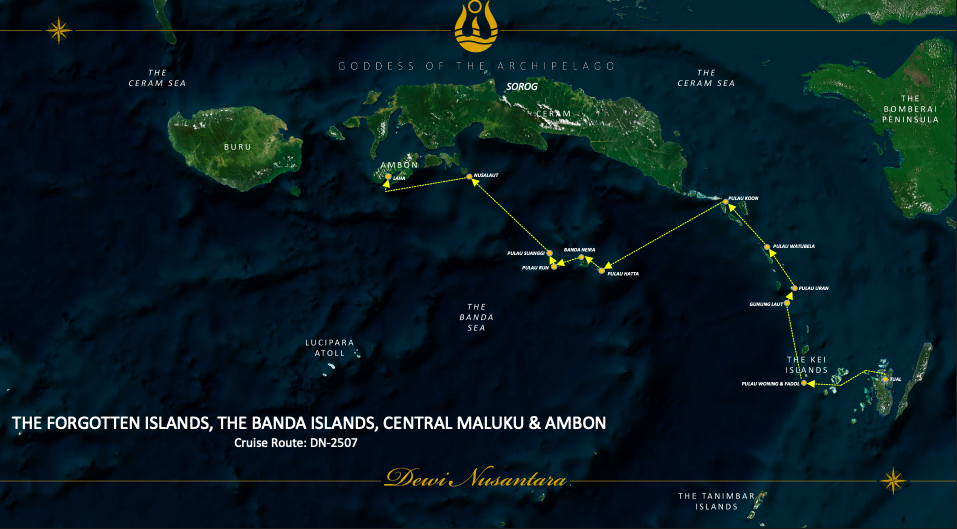
From March 31 to April 11 2025, Anya and I lived an experience that brought together some of our greatest passions: diving, history, and slow traveling. Aboard the Dewi Nusantara, one of the most elegant liveaboard to sail the Indonesian seas (I wrote about her in detail in this article on Scubaportal), we cruised through the legendary Spice Islands, visiting corners of the world where time feels like it’s stood still. We set off on a 12-day liveaboard journey along the routes of the Forgotten Islands, the Banda Islands, Nusa Laut, and Ambon. A crossing of Eastern Indonesia blending marine biology, colonial history, and geological isolation.
A remote, untamed archipelago, where nature still holds an ancient balance and spices whisper tales of long-lost empires.
The cruise took place in ideal conditions: calm seas, visibility often exceeding 30 meters, water temperatures of 28–30°C, and mostly mild or moderate currents. An itinerary accessible even to intermediate divers, without missing out on thrilling, life-packed dives.
I don’t bring a camera or GoPro when I dive: I like to keep my hands (and mind) free to just be in the blue. Luckily, I had the best kind of adventure buddies: Diana, Mark, and Robert, whose underwater photography captures what words often can’t. Thanks to their generous spirit, this post is filled with some of their breathtaking shots. I couldn’t be more grateful.
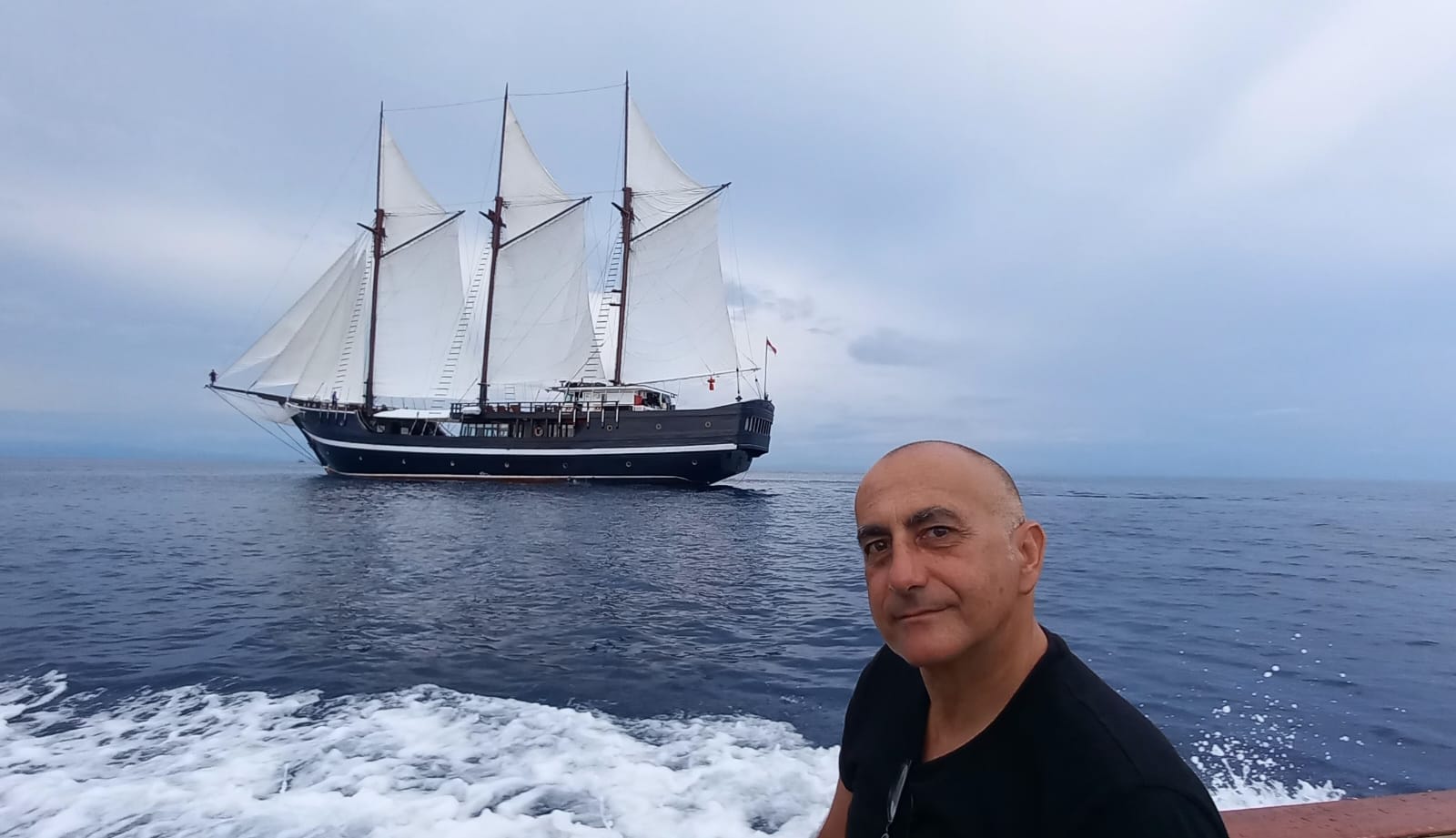
Not just diving, but a plunge into history: forts, spices, and warring empires.
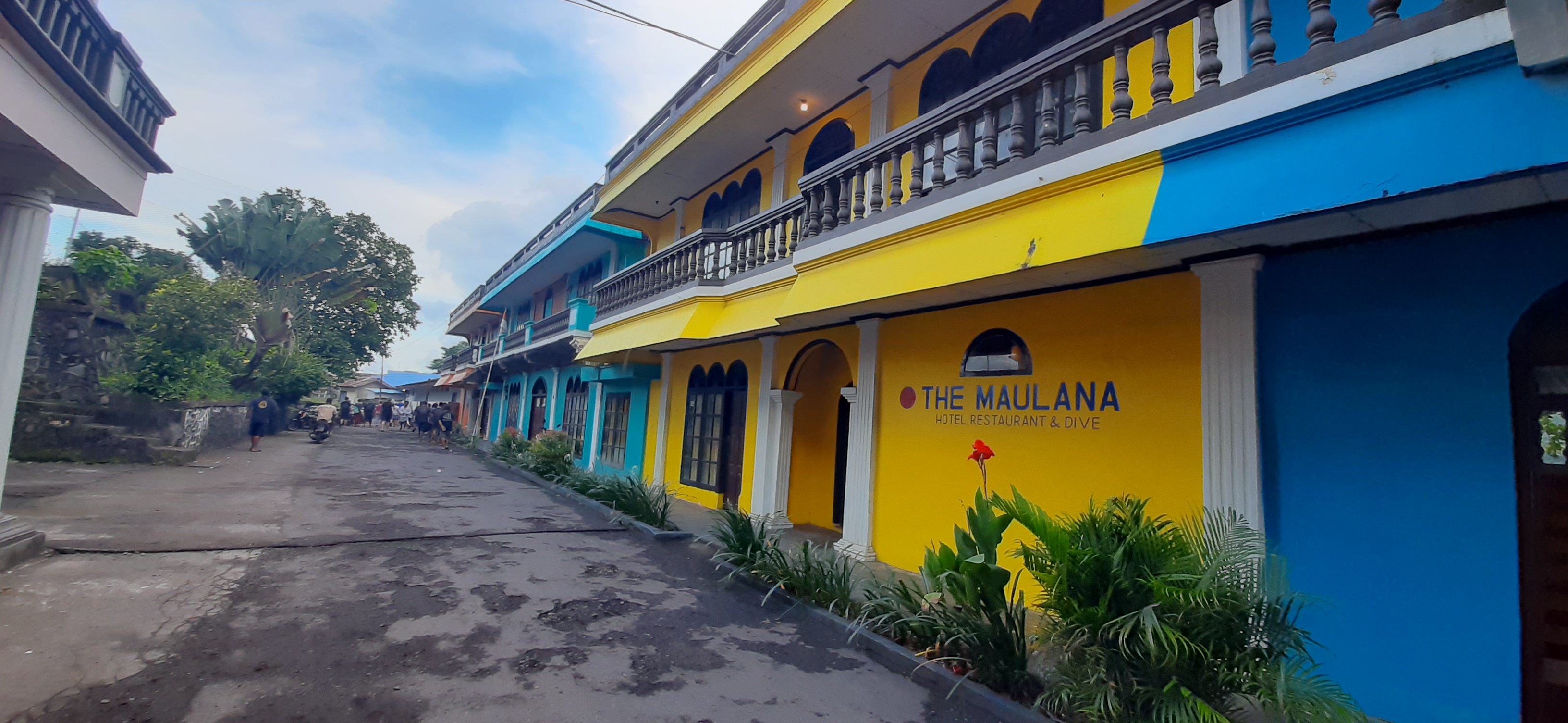
One of the most fascinating aspects of this itinerary is that it wasn’t just about diving — it was a journey through world history, walking (and sailing) along routes that once were the heart of global trade.
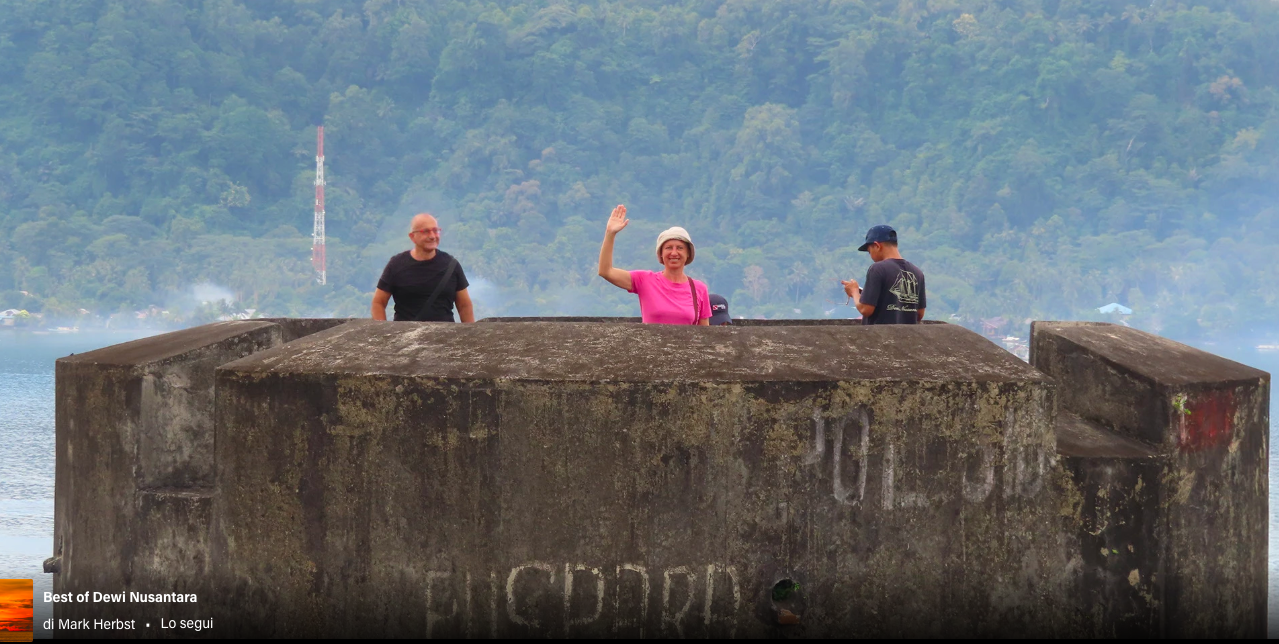
In Banda Neira, at the heart of the Banda Islands, we had the chance to visit the majestic Fort Belgica, built by the Dutch in the 17th century. Towering above the bay, the fort offers a breathtaking view: on one side, the volcanic peak of Gunung Api; on the other, the natural harbor — a strategic vantage point not only for merchant ships, but also for military control over the archipelago.
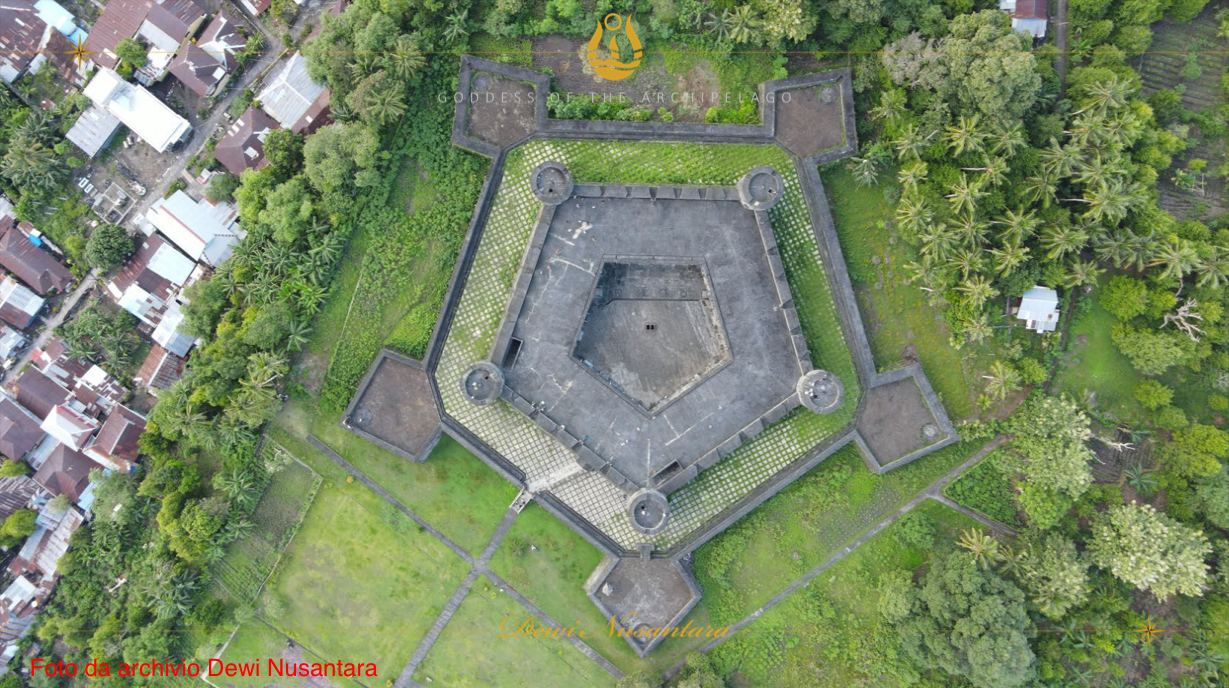
Fort Belgica isn’t just an imposing structure built of volcanic stone — it’s a powerful symbol of the brutal spice race. Here, battles were fought, treaties signed, fortunes made… and lost. At the time, the Banda Islands were the only place on Earth where nutmeg (Myristica fragrans) grew naturally — a spice believed to have miraculous powers, used against the plague and sold for its weight in gold on European markets.
The story became even more incredible as we sailed past Pulau Run, without going ashore, staying silent to better feel its history.
At first glance, Run is just one of many green, mountainous islands in the Moluccas — small, seemingly unremarkable. But in the 17th century, it was a focal point of the known world, the heart of one of the most astonishing geopolitical disputes in colonial history.

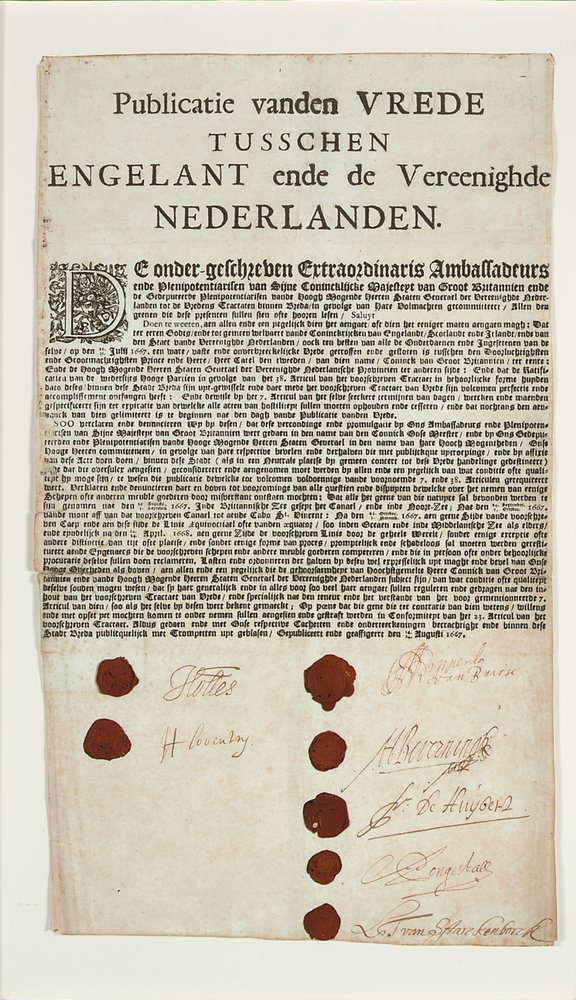
In 1667, at the end of the Second Anglo-Dutch War, the Treaty of Breda was signed. The Dutch were determined to complete their monopoly on nutmeg production, and the only thing standing in their way was one tiny English-controlled island: Pulau Run.
The English, on the other hand, were focused on strengthening their foothold in the Americas. So a deal was struck: the Dutch got Run, and the English took a small colonial outpost called New Amsterdam.
That name might not mean much to you…
But today, we call it Manhattan.
Yes, it actually happened. In the name of nutmeg, one of the most coveted spices of the era — believed to be an aphrodisiac, a plague remedy, and literally worth its weight in gold — Manhattan was traded for Pulau Run.
It’s not a legend, but a well-documented fact: back then, a handful of nutmeg (Myristica fragrans) was more valuable than a settlement in the New World. And the Banda Islands were the only place on Earth where it grew naturally.
Geopolitics once flowed through this very place — where today, only our curious gaze passes, along with the vibrant rhythm of local life. But the feeling lingers: these islands changed the course of history.
Alright, but when do we start talking about the dives?
You’re right, sorry. I let myself get carried away by the fascinating twists of history.
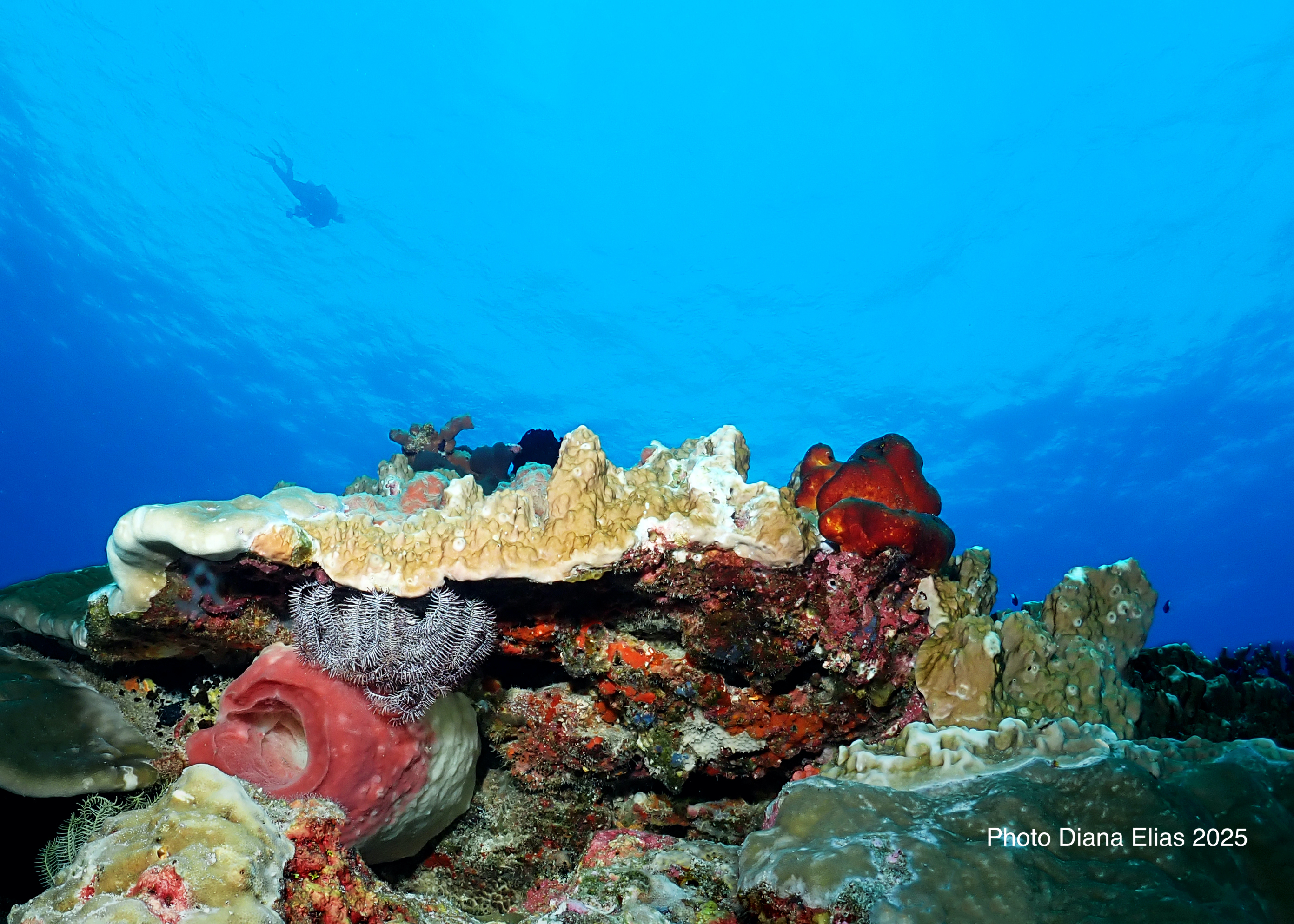
As for the dives: they were all memorable. Not a single one that I’d call disappointing. So this selection isn’t meant to be any kind of definitive ranking. Every dive site we explored during the trip had truly exceptional qualities.
The four dives I mention here are simply a subjective example based on my personal experience of this journey. After all, I couldn’t very well bore you with the description of about forty dives…
Lava Flow – Banda Neira (April 6)
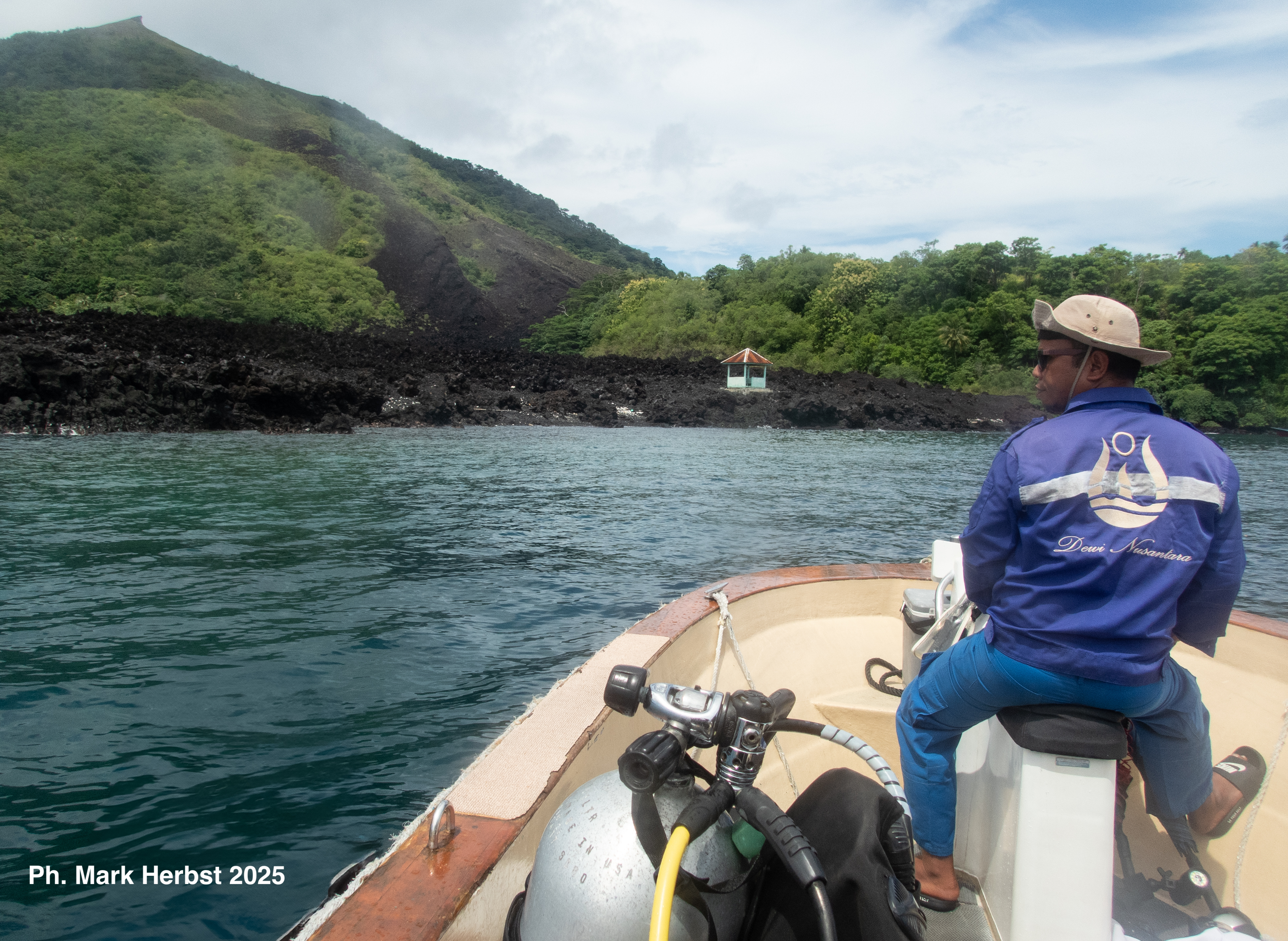
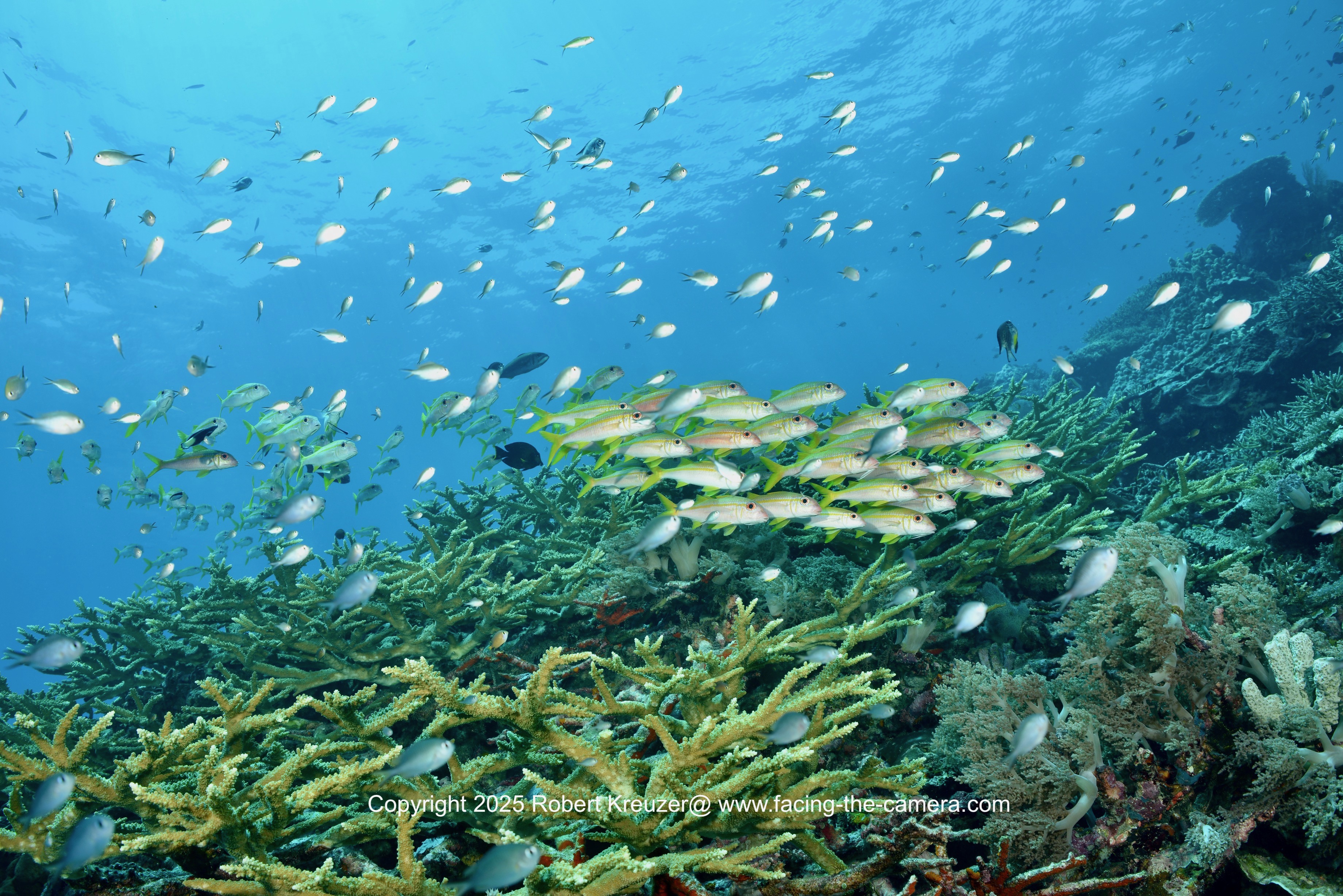
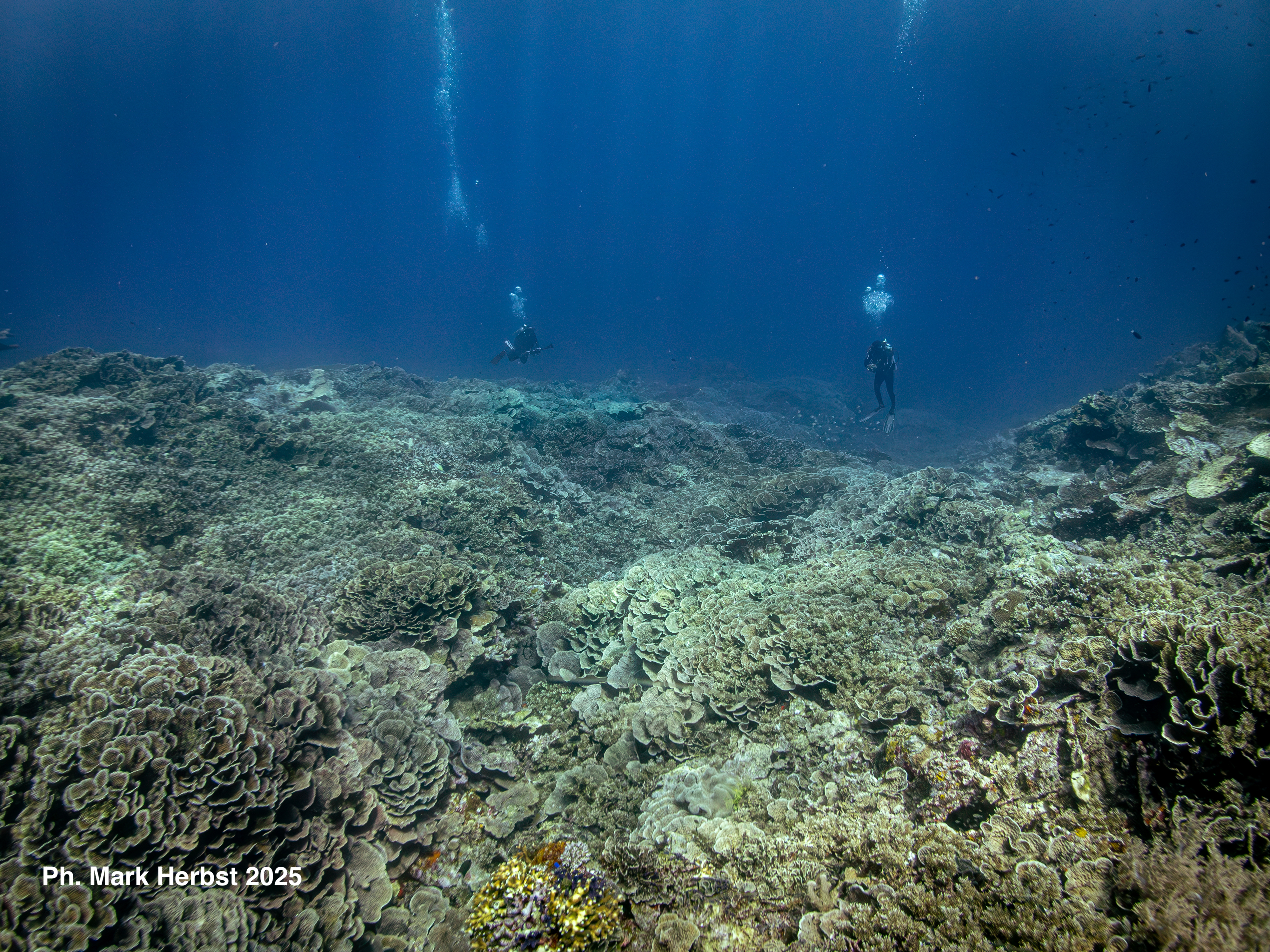
A site that perfectly embodies nature’s resilience. Here, in 1988, a lava flow from the volcano Gunung Api surged down into the sea, burying the coral reef beneath it. Today, that same black lava serves as the foundation for vast, thriving colonies of table corals (Acropora spp.), porites (Porites spp.), and branching corals (Pocillopora spp.) — all in astonishingly good health.
Surfacing after the dive, you’re struck by the powerful contrast between the stark, black lava above the waterline… and the lush, vibrant reef that has flourished below in just under forty years.
A textbook case of biological rebirth, just a few meters beneath the surface.
Amed Reef – Nusa Laut (April 8)
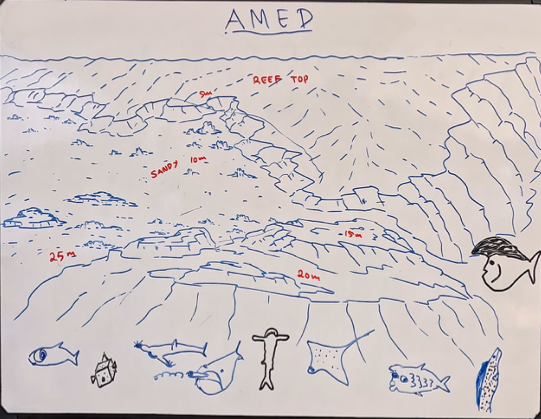
We did four dives at Amed Reef.
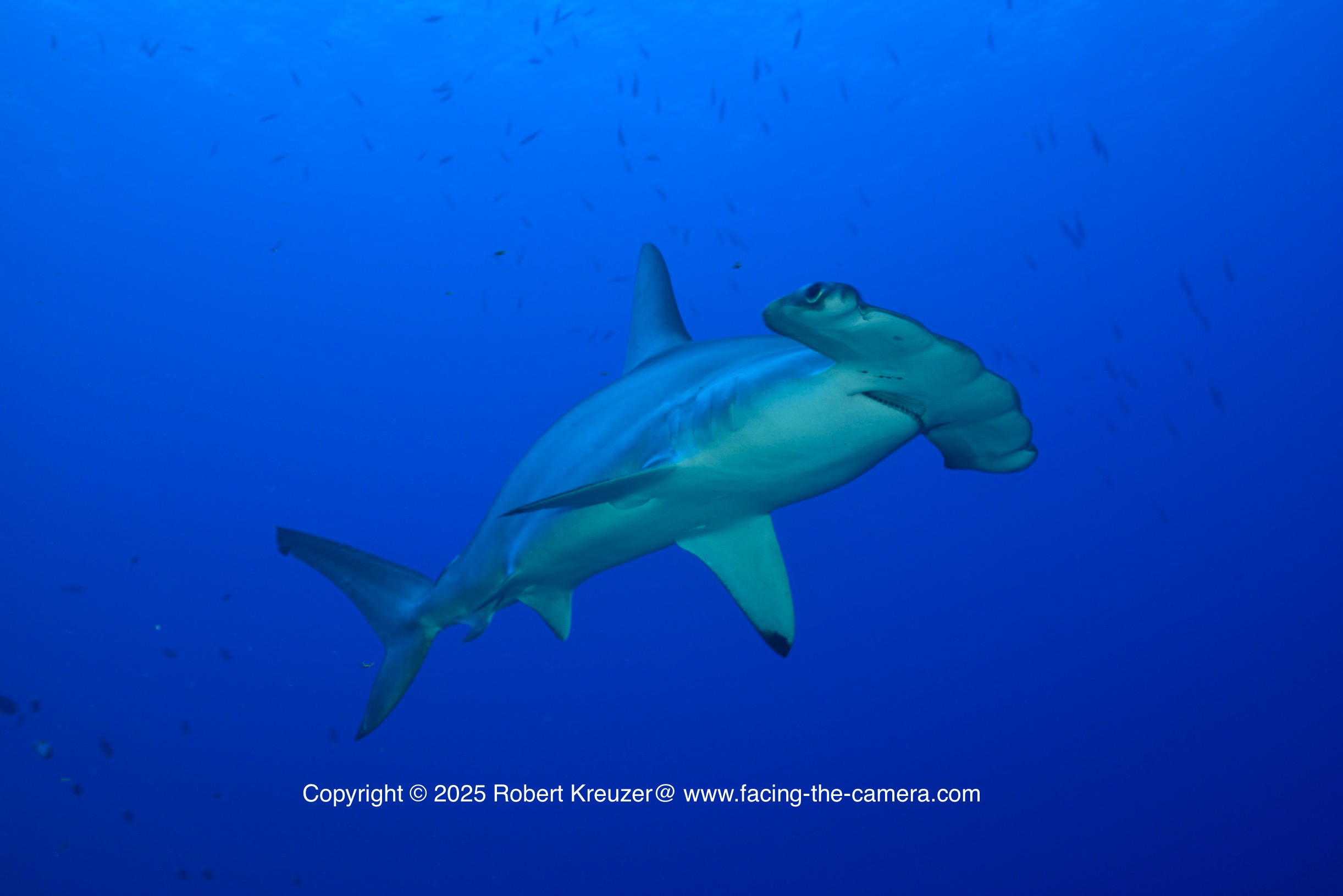
The first dive of the morning was one of those you don’t easily forget: out in the open blue, with a light current still running, he appeared — a hammerhead shark (Sphyrna lewini), solitary, elegant, perfect. A brief but powerful encounter, the kind that makes every pre-dawn wake-up feel completely worth it.
But the day kept delivering. Amed turned out to be an exceptionally vibrant and diverse reef, teeming with life. We spotted several whitetip reef sharks (Triaenodon obesus), massive schools of fusiliers (Caesio spp.), midnight snappers (Macolor macularis), bigeye trevallies (Caranx sexfasciatus), and bluefin trevallies (Caranx melampygus), all swirling through the current.
And then there were the nudibranchs. A stunning variety of them, scattered like tiny, flamboyant jewels across the reef.
Koon Wall – Pulau Koon (April 4)
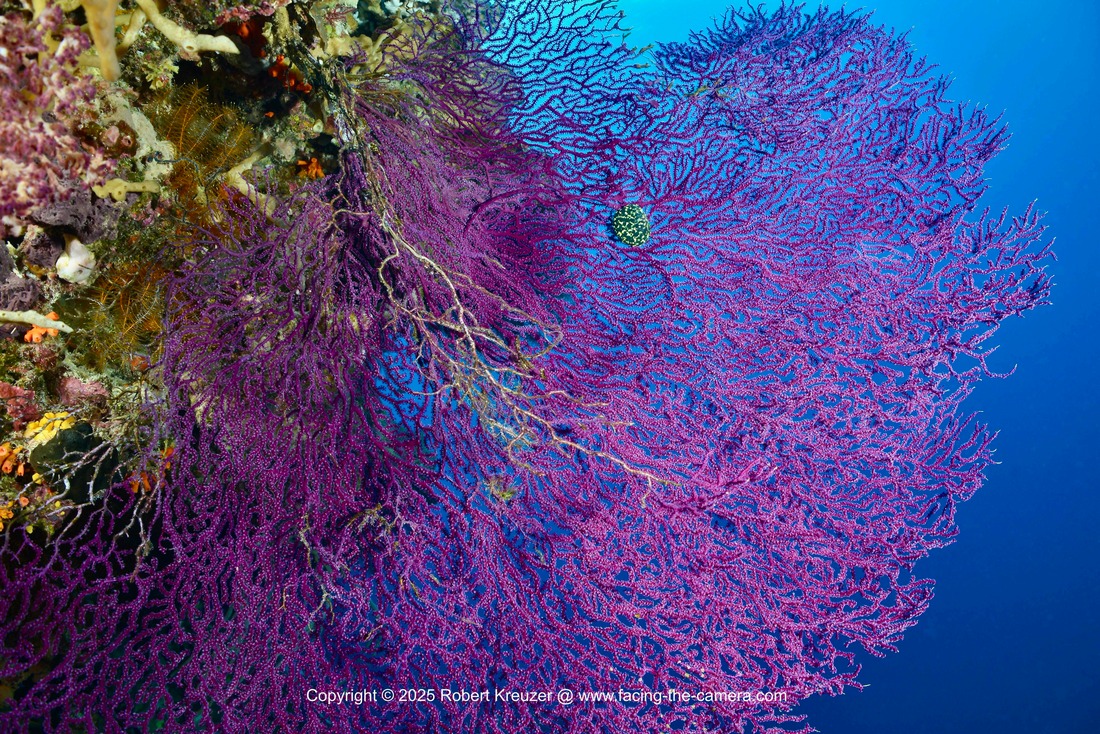
A sheer wall bursting with life, not surprisingly nicknamed by the locals “The Wall of Life.”
That day, the current was gentle, which allowed us to move slowly and really take in both what was swimming in plain sight and what stayed perfectly still, masterfully camouflaged.
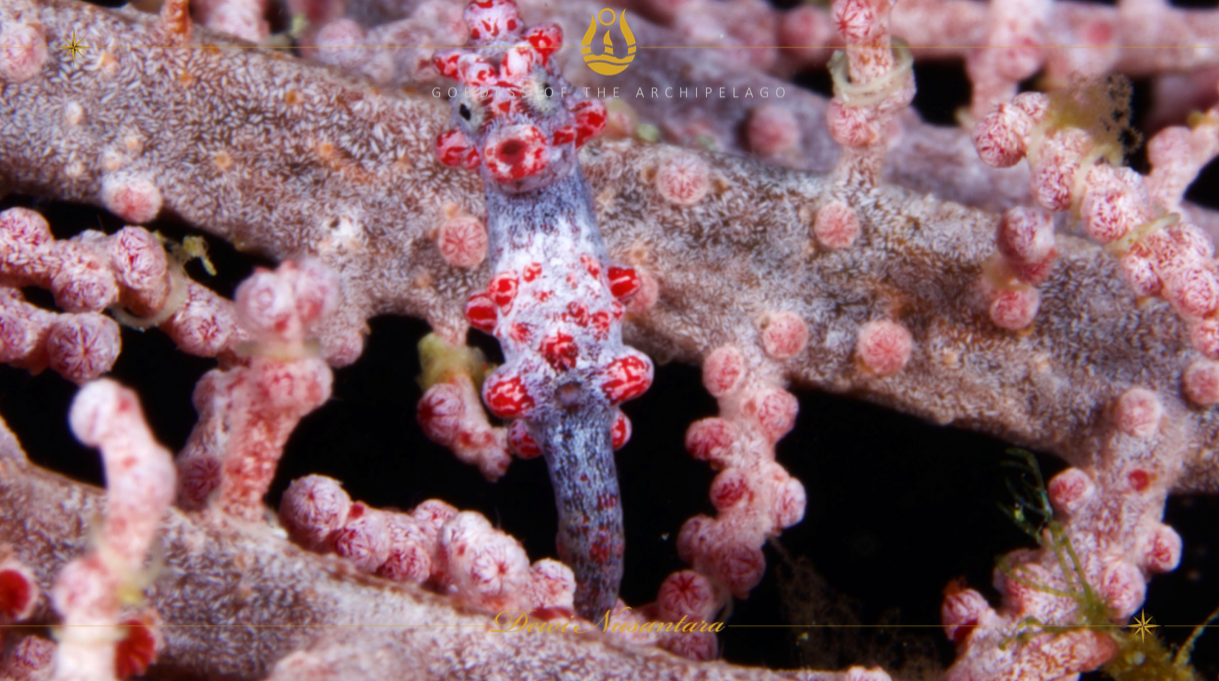
Tucked among the ledges and sea fans, our expert guides managed to spot for us some pygmy seahorses (Hippocampus bargibanti), beautifully hidden in the gorgonians: tiny treasures almost impossible to find without trained eyes.
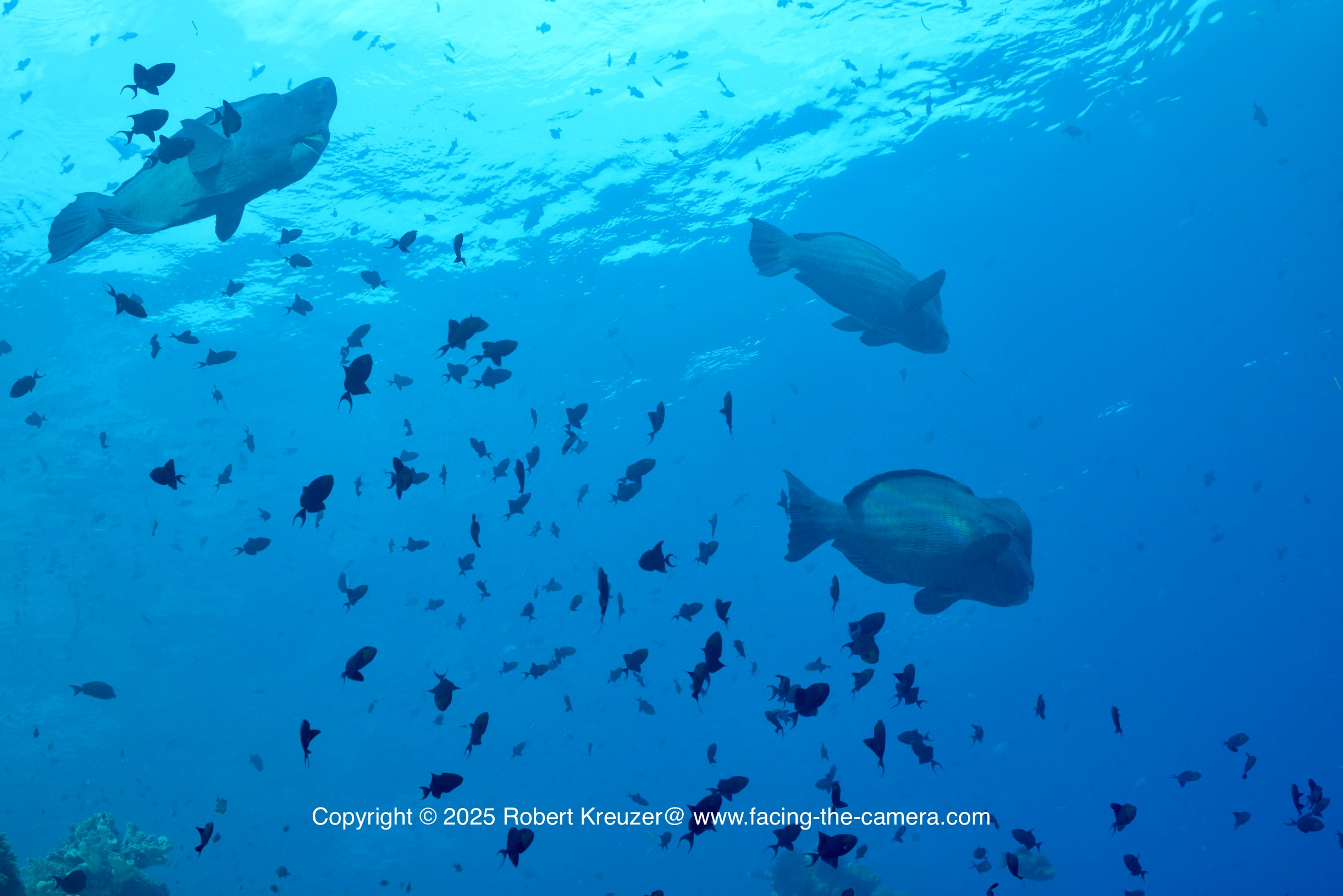
A bit further along, a group of humphead parrotfish (Bolbometopon muricatum) appeared in the distance. Massive and unmistakable silhouettes cruising calmly.
Closer to the reef, Oriental sweetlips (Plectorhinchus spp.) moved in small, scattered groups.
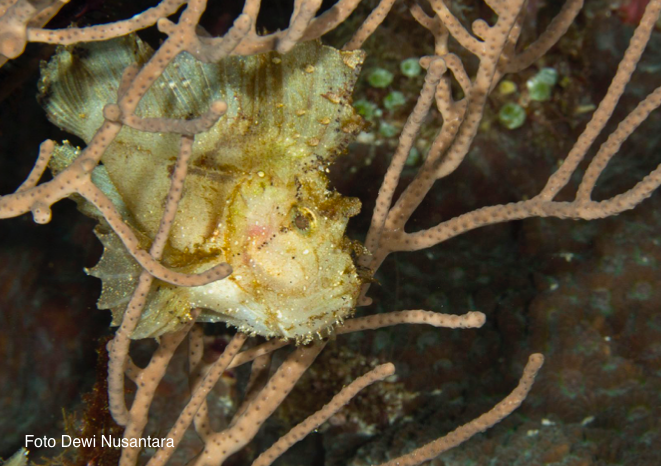
A yellow-edged moray (Gymnothorax flavimarginatus) peeked out from a crevice, while on a coral branch we spotted a leaf scorpionfish (Taenianotus triacanthus), still and perfectly camouflaged.
An incredibly rich site, packed with variety in a single dive. It’s the kind of place to explore slowly. Especially if, like us, you’re lucky enough to find it in calm, gentle conditions.
Laha – Ambon (April 9 & 10)
A world of its own. Pure muck diving: sandy bottom, rubble, hardly any coral… and an astonishing amount of life. Less famous than nearby Lembeh, but absolutely on par.
Then again, as you’ve probably gathered, I’m not really into rankings.
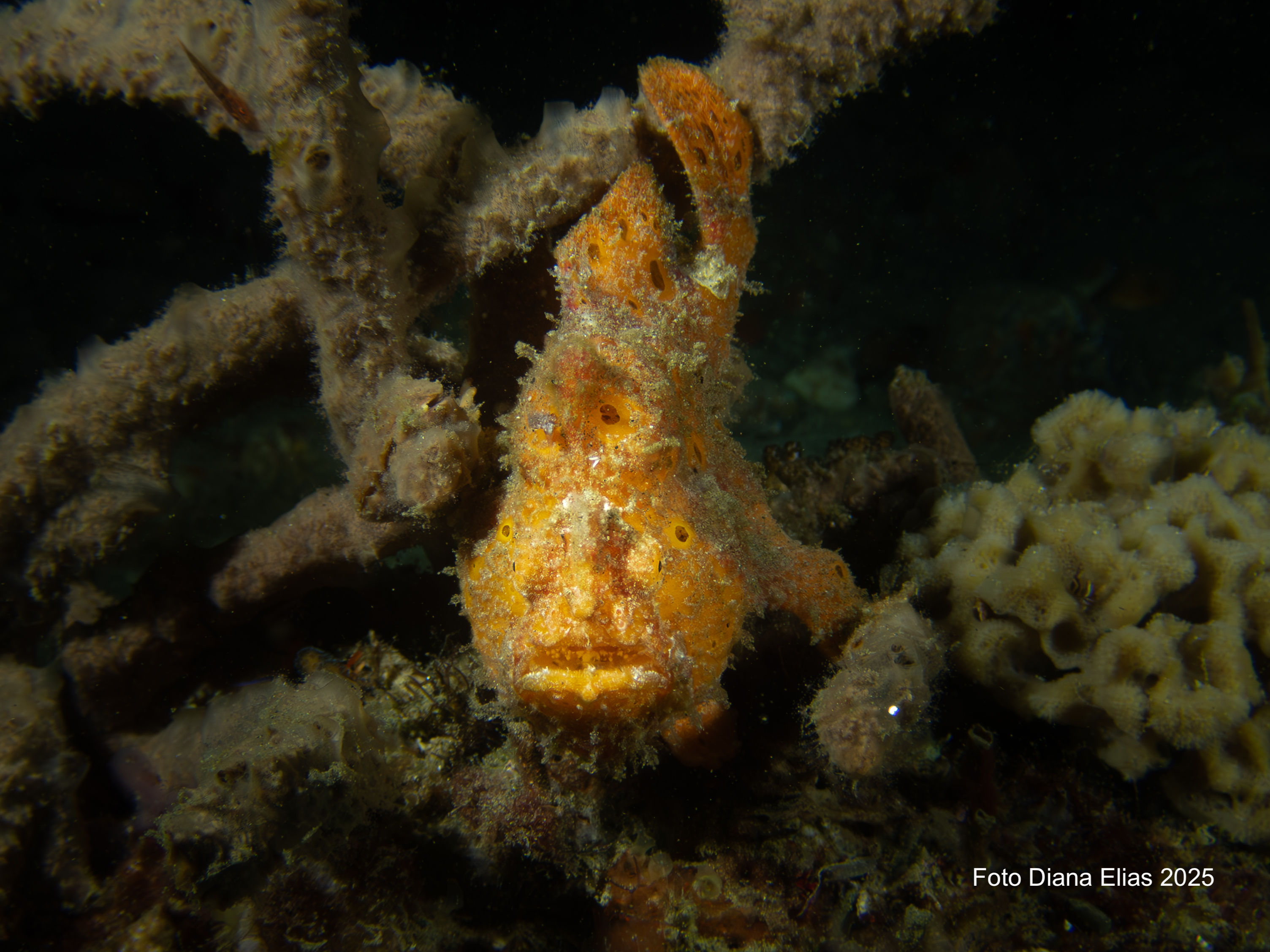
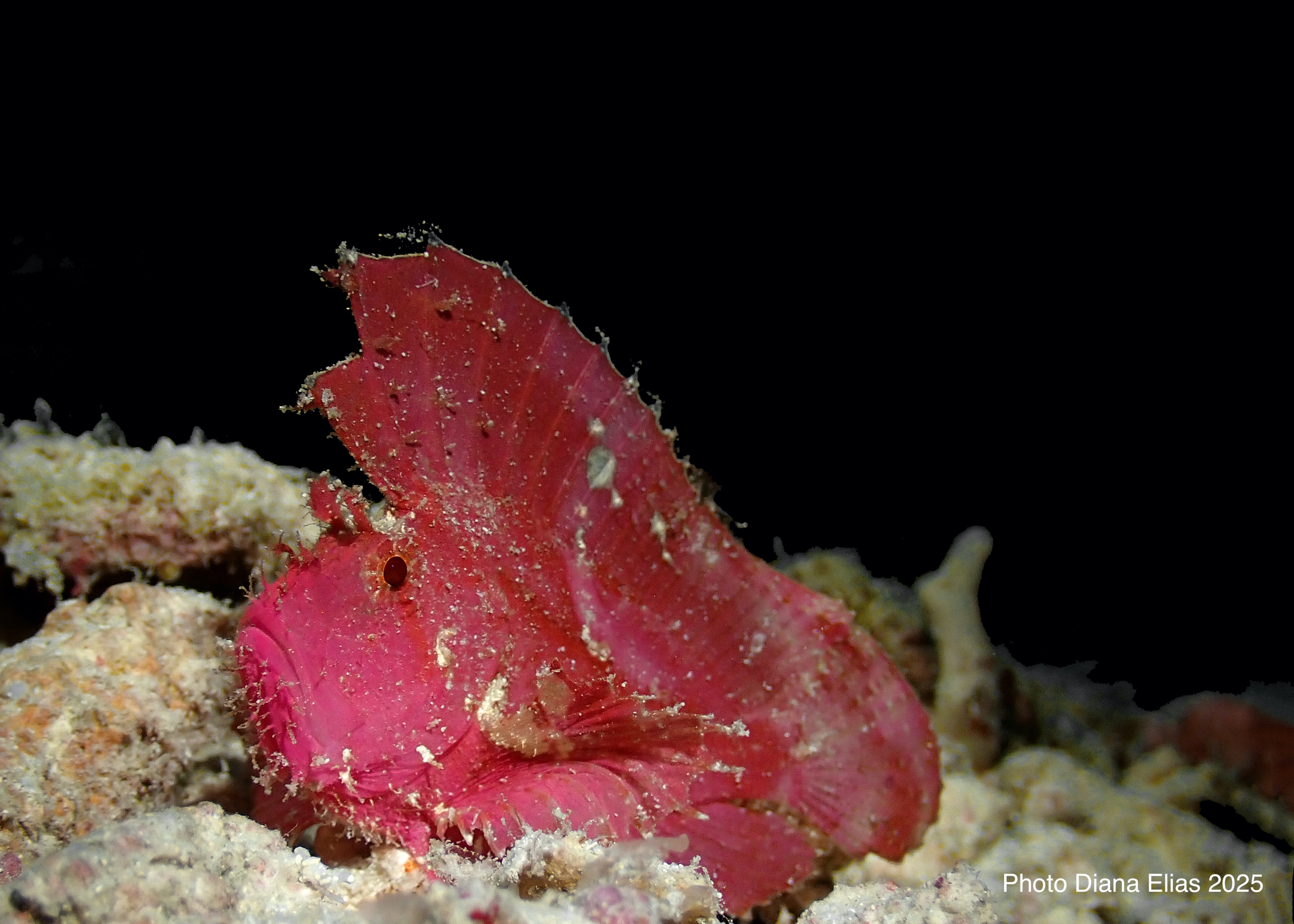
On these dives, we came across several frogfish (Antennarius spp.), some boldly out in the open, others so perfectly camouflaged they were almost invisible. And we were lucky enough to spot a couple of stunning Rhinopias (Rhinopias spp.) as well, always a showstopper.
Nudibranchs galore — including the unforgettable Melibe viridis, probably the strangest I’ve ever seen: translucent, wavy, downright alien. And yes, nudibranchs are all weird by nature, but this one takes the crown. No photo, sorry, go look it up, you’ll see what I mean.
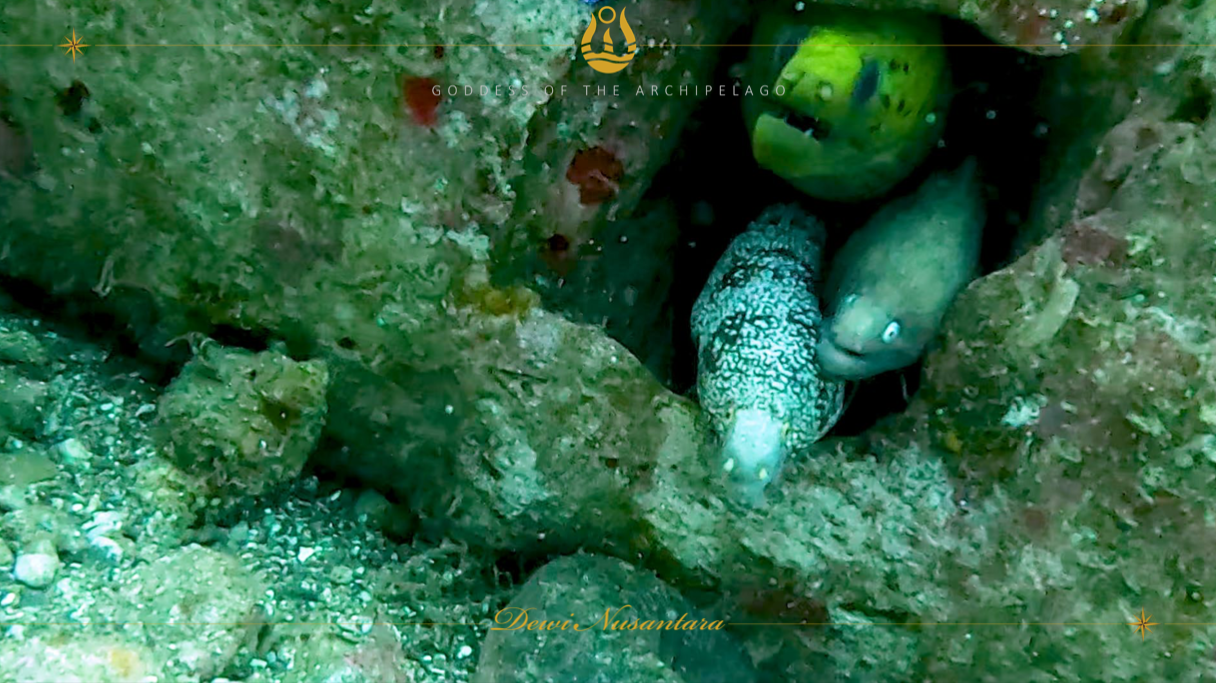
We also spotted plenty of moray eels, often sharing the same crevice and, judging by their faces, not exactly thrilled about the arrangement.

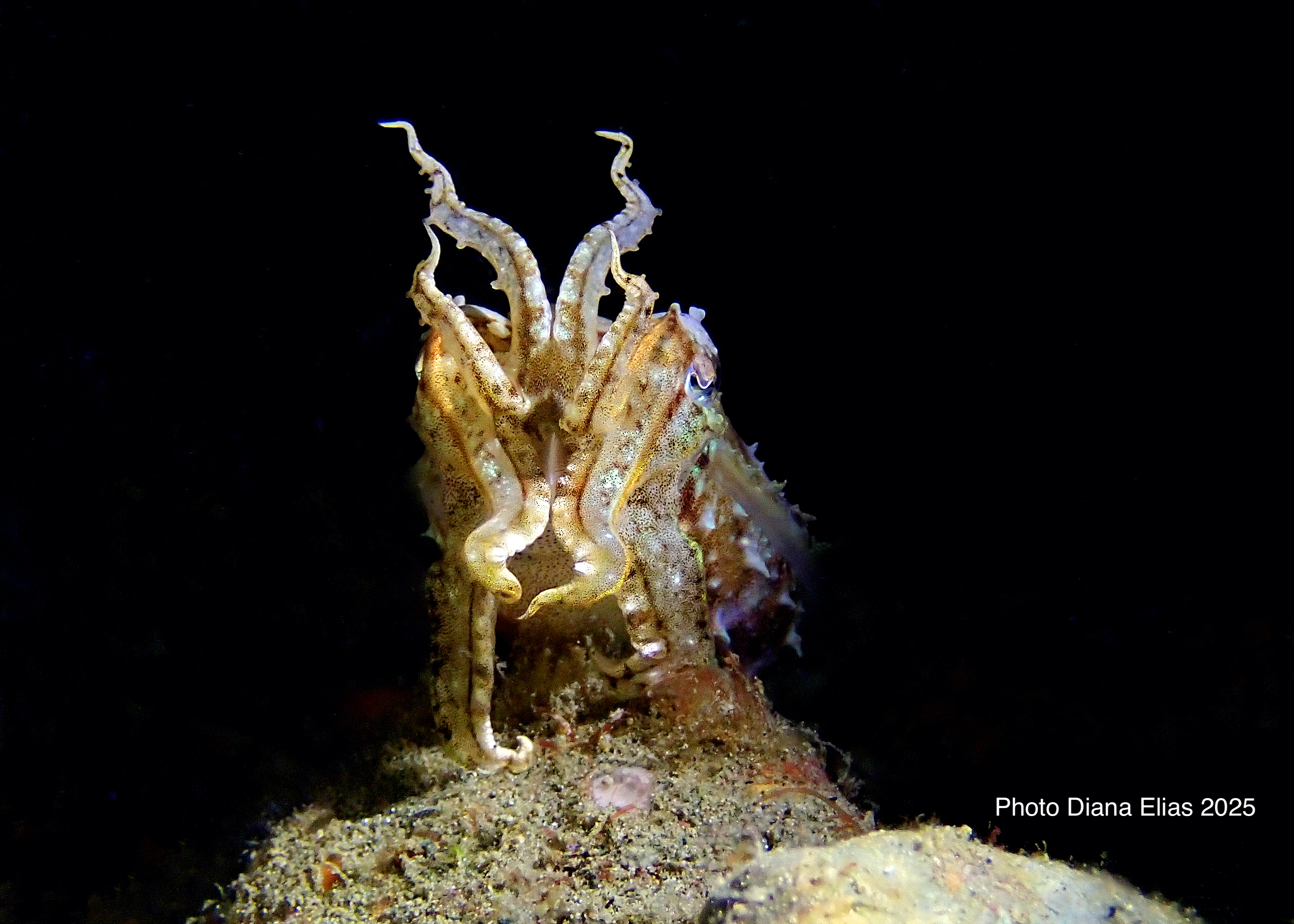
The night dives were among the richest of the whole trip: tiny cuttlefish, crabs, shrimp: every crevice a frame-worthy scene.
This is the kind of site that demands sharp-eyed guides, a good dose of patience, and a slow pace… but the rewards are absolutely worth it.
Here we are, wrapping things up…
What can I say?
This wasn’t just a trip through spectacular reefs.
It was a complete journey: marine biology, volcanic geology, colonial history, quiet moments, effortless drifts, starlit skies, and the right kind of people.
A stress-free experience, far from the crowds — with that rare and precious feeling of being in the right place at the right time.
A true scuba adventure.
Perfect for those who can still be amazed by a shark, a nudibranch, a crumbling fortress, or a coral reef reborn from lava.
Endless thanks again to my amazing travel buddies — Diana, Mark, and Robert — for generously allowing me to share some of their stunning images.
For bookings, information, or to organize a custom dive journey, feel free to get in touch.
Email: sales@dewi-nusantara.com
WhatsApp: +60 12-339 5941
Website: www.dewi-nusantara.com

 pipinoroutes.com